Niacin (vitamin B3, as nicotinic acid), NMN and NR are the three most-discussed NAD+ precursors — ingredients the body converts into NAD+, the coenzyme that helps power cellular energy and that naturally declines with age. They are often treated as interchangeable, but they are not: they reach NAD+ by different routes, and the latest human research suggests they may converge on the same molecule — nicotinic acid (niacin).
The short answer
A 2026 human study in Nature Metabolism found that nicotinic acid (niacin) is a potent NAD+ booster, while NMN, NR and nicotinamide are not potent on their own. Notably, NMN and NR appear to raise NAD+ largely by being converted to niacin by gut bacteria, then acting through the Preiss-Handler pathway. In short, the popular precursors seem to work, in part, by becoming niacin.
Niacin vs NMN vs NR: at a glance
| Niacin (nicotinic acid, B3) | NR (nicotinamide riboside) | NMN (nicotinamide mononucleotide) | |
|---|---|---|---|
| What it is | A classic form of vitamin B3 | A modified form of vitamin B3 | A nucleotide (NR plus a phosphate) |
| Route to NAD+ | Preiss-Handler pathway (direct) | Largely via conversion to niacin, then Preiss-Handler | Largely via conversion to niacin, then Preiss-Handler |
| Raises blood NAD+? | Potent, direct booster | Yes, over ~2 weeks | Yes, over ~2 weeks |
| Track record | Decades of human use | Newer | Newer |
| Worth knowing | Higher doses can cause a temporary, harmless flush | Often marketed as premium | Supplement status varies by country |
The three pathways, briefly
- Niacin (nicotinic acid) raises NAD+ directly through the Preiss-Handler pathway, a long-established metabolic route.
- NR enters the salvage pathway and, according to recent research, is also converted to niacin by gut microbes.
- NMN is closely related to NR and follows a similar pattern.
What the latest human research shows
In a 2026 randomized, placebo-controlled study published in Nature Metabolism, researchers compared NR, NMN and nicotinamide head-to-head in 65 healthy adults over 14 days. Two findings stand out:
- NR and NMN (but not nicotinamide) raised circulating NAD+ over the two weeks.
- The increase appears to come largely from microbial conversion to nicotinic acid (niacin) — and in whole blood, the researchers showed niacin is a potent NAD+ booster, while NMN, NR and nicotinamide are not on their own.
The authors propose that NR and NMN ultimately raise NAD+ through the Preiss-Handler pathway — the same route niacin uses directly. (Christen et al., Nature Metabolism, 2026; DOI: 10.1038/s42255-025-01421-8; ClinicalTrials.gov NCT05517122.)
So which precursor makes sense?
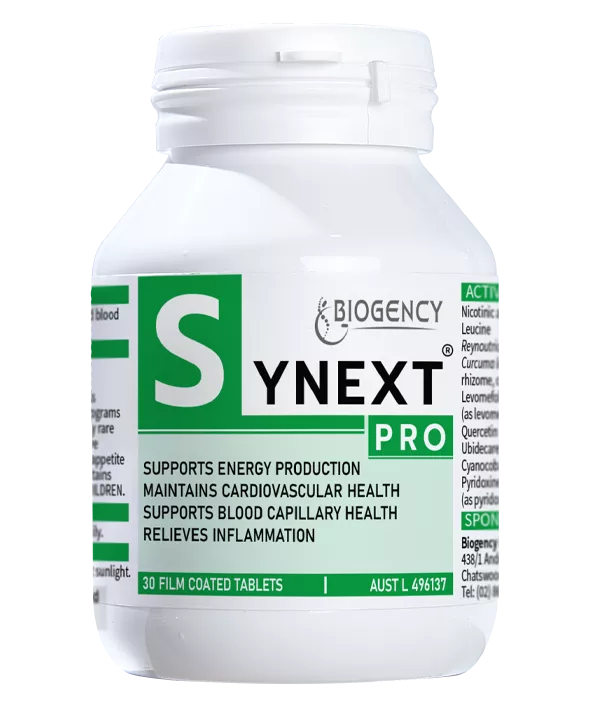
If much of the NAD+-raising effect of NMN and NR comes down to niacin, then formulating with niacin directly is a straightforward, well-characterised approach. That is the thinking behind Biogency’s Synext range, which is built on niacin (nicotinic acid) via the Preiss-Handler pathway, paired with supporting ingredients such as quercetin, resveratrol (from Japanese knotweed), CoQ10 and turmeric.
Key takeaways
- Niacin, NR and NMN all aim to raise NAD+, but by different routes.
- Recent human research points to nicotinic acid (niacin) as the potent, direct NAD+ booster.
- NR and NMN appear to work in large part by being converted to niacin.
- Biogency’s Synext is formulated around niacin and the Preiss-Handler pathway.
This article is general information about ingredients and is not medical advice. Always read the label and follow the directions for use; if symptoms persist, talk to your health professional.