If you have ever taken a supplement containing nicotinic acid, a form of vitamin B3, you may have noticed a temporary warm, red, tingling or itchy feeling on the skin. This is commonly known as niacin flush.
For many people, the sensation can feel surprising the first time it happens. It may appear on the face, neck, chest or upper body and usually fades naturally. While it can feel uncomfortable, niacin flush is a known response associated with nicotinic acid, one of the key nutrients used in many vitamin B3 and NAD+ support formulas.
At Biogency, we believe supplement education matters. Understanding why niacin flush can happen helps you feel more confident when using Synext as part of your daily wellness routine.
What Is Niacin?
Niacin, also known as vitamin B3, is a water-soluble B vitamin naturally found in foods and available in dietary supplements. The body converts absorbed niacin into NAD, a coenzyme involved in many metabolic reactions, including cellular energy production.
NAD plays a role in helping the body convert nutrients from carbohydrates, fats and proteins into usable energy. This is why vitamin B3 is often discussed in relation to metabolism, energy pathways and general wellbeing.
There are different forms of vitamin B3. Nicotinic acid is the form most closely associated with niacin flush. Other forms, such as nicotinamide, generally do not produce the same flushing response because they behave differently in the body.
What Does Niacin Flush Feel Like?
Niacin flush may include:
- Warmth or redness on the skin
- Tingling or prickling sensations
- Mild itchiness
- A flushed appearance on the face, neck or chest
- A temporary hot feeling after taking the supplement
This response is usually temporary. It may be more noticeable when nicotinic acid is taken on an empty stomach, when the body is not yet used to the nutrient, or when a person is sensitive to vitamin B3.
Why Can Niacin Cause Flushing?
Niacin flush happens because nicotinic acid can interact with receptors in the body that influence blood vessels near the skin. One receptor often discussed in niacin research is GPR109A.
When this pathway is activated, small blood vessels near the surface of the skin may temporarily widen. This can increase blood flow close to the skin, creating the familiar warmth, redness or tingling associated with niacin flush.
In simple terms, niacin flush is not the same as an allergic reaction. It is a known response to nicotinic acid.
Why Does Synext Include Vitamin B3?
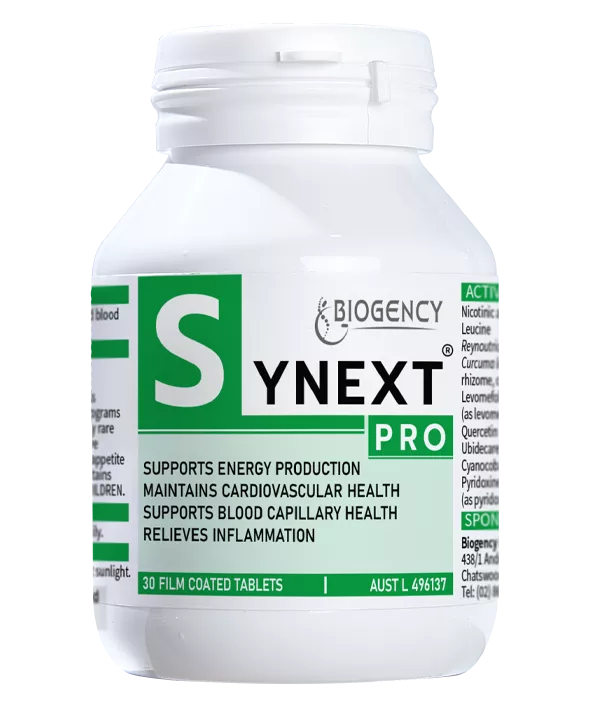
Synext contains nicotinic acid as part of a broader NAD+ support formula. Synext is designed to support daily vitality, cellular energy pathways and healthy ageing as part of a balanced wellness routine.
The Synext formula also includes ingredients such as CoQ10, quercetin, turmeric extract, pomegranate extract, zinc, selenium, magnesium and selected B vitamins. Together, these nutrients are selected to support general wellbeing, antioxidant support and everyday vitality.
Niacin is included because vitamin B3 is connected with NAD pathways in the body. Since NAD is involved in cellular energy metabolism, vitamin B3 has become an important nutrient in conversations about energy support and healthy ageing.
Is Niacin Flush Harmful?
For many people, niacin flush is mild and temporary. It often settles as the body becomes more familiar with nicotinic acid intake.
That said, individual responses vary. Some users may feel little or no flush, while others may feel it more strongly. Sensitivity can depend on timing, food intake, dose, hydration and personal tolerance.
How to Reduce Niacin Flush Discomfort
If you are sensitive to niacin flush, the following steps may help:
- Take Synext with food, as directed on the product label
- Avoid taking it on an empty stomach
- Drink water before and after taking your supplement
- Use the product consistently as directed so your body can adjust
- Do not exceed the recommended dosage
Always read the label and follow the directions for use.
Niacin Flush vs Allergy: What Is the Difference?
Niacin flush is usually a temporary skin warmth or redness linked to nicotinic acid. It typically fades on its own.
An allergic reaction may involve symptoms such as swelling, breathing difficulty, widespread hives, severe dizziness or symptoms that feel unusual or concerning. If you experience these symptoms, seek medical attention.
Because everyone responds differently to supplements, it is important to listen to your body and use products only as directed.
Final Thoughts
Niacin flush is a common and well-known response to nicotinic acid, a form of vitamin B3. While the temporary warmth, redness or tingling can feel unexpected, understanding the mechanism behind it can make the experience easier to recognise.
For those using Biogency Synext, vitamin B3 plays a role in supporting NAD-related energy pathways and everyday vitality. As with any supplement, the best approach is to follow the label, take it with food, stay consistent and consult a healthcare professional if you have questions about your individual health needs.
Health Warning: Always read the label and follow the directions for use. Vitamin supplements should not replace a balanced diet. This medicine may not be right for you. Do not exceed the recommended dosage. Read the warnings before purchase. If symptoms persist, talk to your health professional. This product is not intended to diagnose, treat, cure or prevent any disease.
FAQ
What is niacin flush?
Niacin flush is a temporary warmth, redness, tingling or itchy feeling that can happen after taking nicotinic acid, a form of vitamin B3.
Why does Synext cause flushing for some people?
Synext contains nicotinic acid. This form of vitamin B3 can temporarily widen small blood vessels near the skin, which may create a warm or flushed feeling.
Is niacin flush the same as an allergy?
Usually, no. Niacin flush is a known response to nicotinic acid and often fades naturally. However, if you experience swelling, breathing difficulty, hives or severe symptoms, stop use and seek medical advice.
How long does niacin flush last?
It varies by person. For many users, the sensation is temporary and settles naturally. If symptoms feel intense or persist, speak with a healthcare professional.
How can I reduce niacin flush?
Take Synext with food as directed, avoid taking it on an empty stomach, drink water and do not exceed the recommended dosage.