
By Dr Sun. English translation of the original Zhihu article, published on 11 January 2020. This translation preserves the author’s views and the research context at the time, including the original interpretations and recommendations. It is not an updated assessment of clinical evidence.
If we were to name the most talked-about areas of anti-ageing research in recent years, alongside NAD+ would be the use of senolytic drugs in senotherapy, or treatments aimed at clearing senescent cells. In this article, I will discuss the theory, research and applications relating to senescent cells.
What are senescent cells?
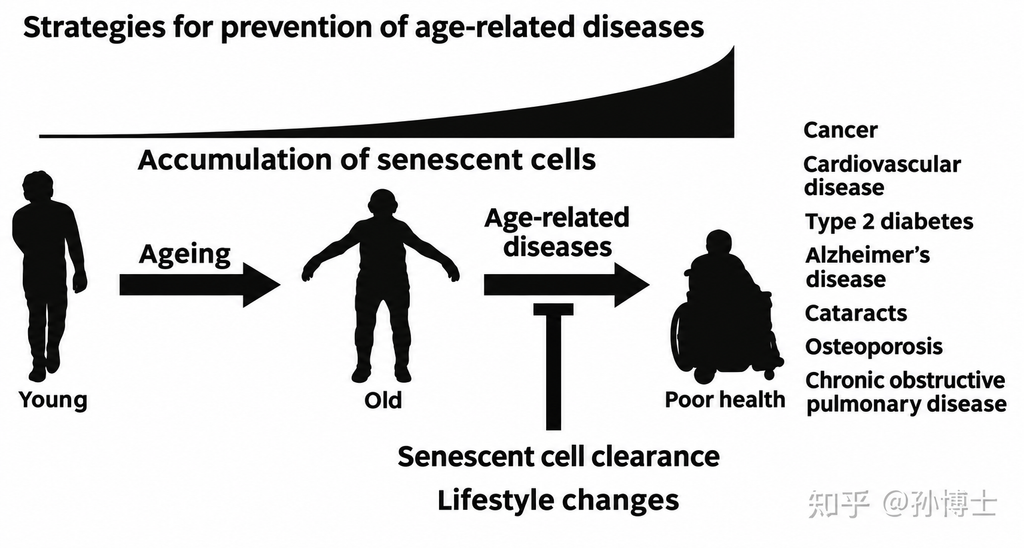
In my first article on Zhihu, I mentioned that the accumulation of senescent cells can promote cancer progression. The concept of senescent cells is actually much easier to understand than NAD+. It describes ageing at the cellular level. Senescent cells are a special state that cells can enter. When healthy cells experience molecular or cellular stress, such as DNA damage, oxidative free radicals, chemical injury, radiation or physical damage, a senescence programme can be activated, turning them into senescent cells and preventing further proliferation. These cells no longer perform all the functions of healthy cells, and they stop growing and dividing. They remain in tissues like zombies, which is why they are sometimes called zombie cells.
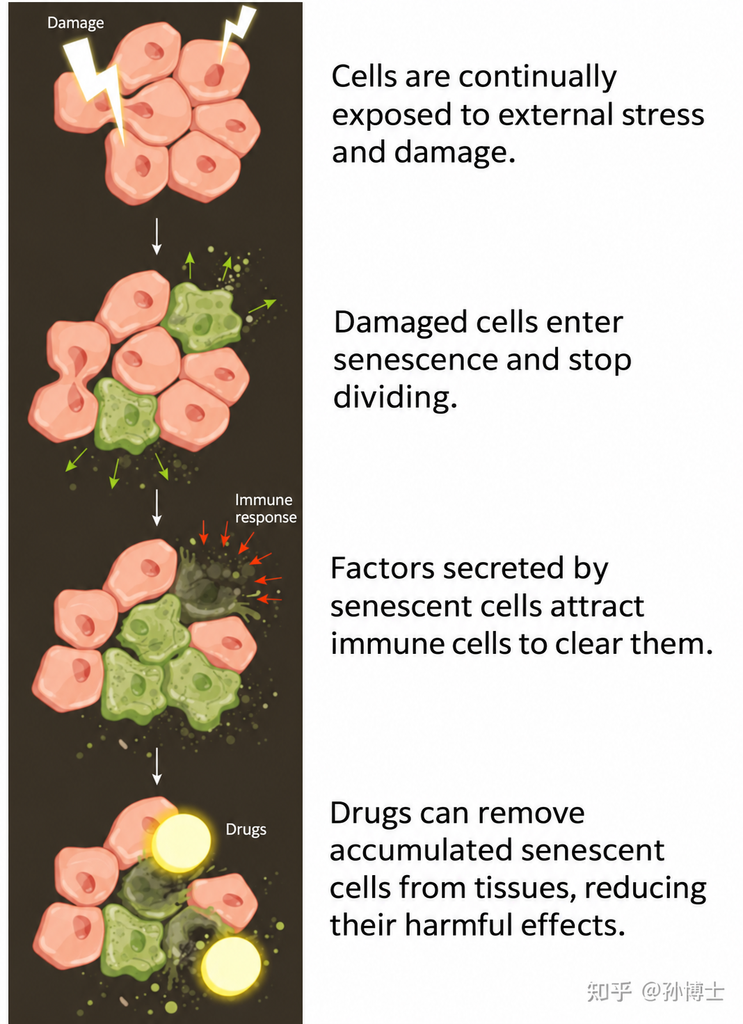
Image adapted from Scientific American: To Stay Young, Kill Zombie Cells.
As early as 1961, two microbiologists, Leonard Hayflick and Paul Moorhead, discovered that human cells have a finite capacity to replicate and cannot proliferate indefinitely. They first described this loss of proliferative capacity as cellular senescence. At the time, however, experimental methods were limited and supporting data were scarce. Their findings were dismissed as foolish, and the concept was overlooked for many years.
In 1995, scientists found that markers of senescent cells accumulated extensively in ageing tissues and organs, linking cellular senescence with ageing in humans.
Around 2000, cellular senescence was found to suppress the excessive growth of damaged cells and produce beneficial effects. Scientists recognised that inducing senescence in damaged cells was originally a mechanism of self-protection and repair. Activating the programme can promptly stop damaged cells from proliferating, after which the immune system can clear the resulting senescent cells. This short-term response can benefit embryonic development, wound healing, tissue regeneration and the prevention of cancer-cell formation. During that period, cellular senescence was therefore widely regarded as one of the body’s cancer-prevention mechanisms.
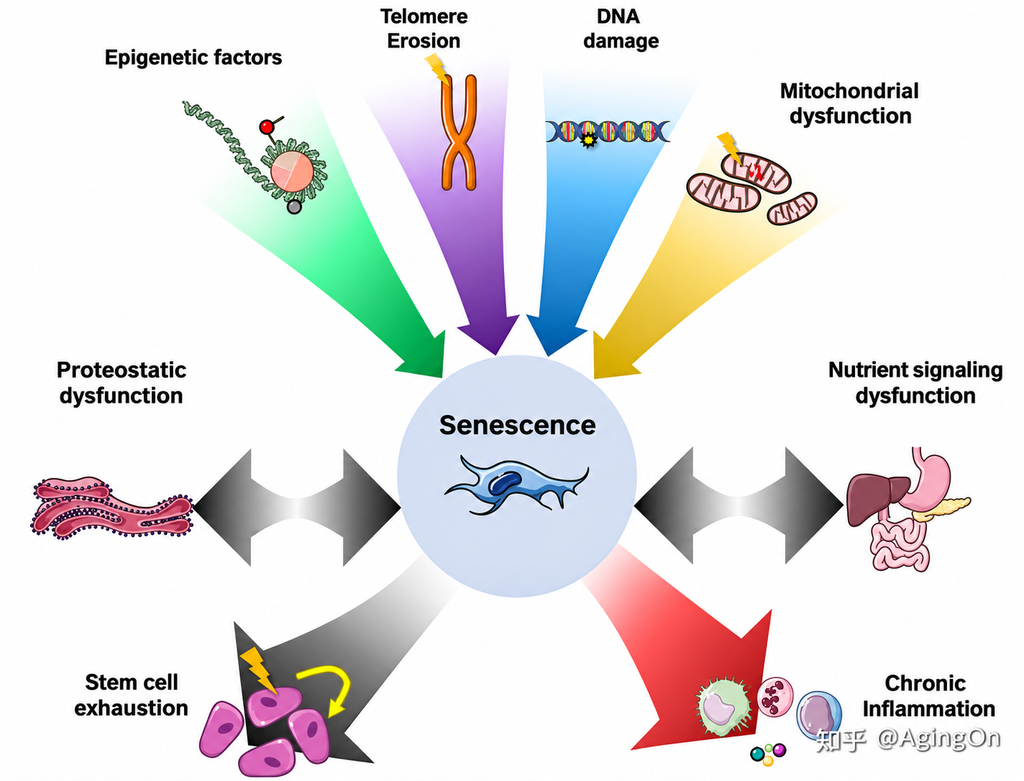
When senescent cells accumulate
This view continued until 2008, when three research groups found that senescent cells accumulating in the body continuously release a range of inflammatory factors, collectively described as the senescence-associated secretory phenotype, or SASP. These factors can sustain chronic inflammation and damage neighbouring healthy cells. Once damaged, those cells may themselves become senescent. The inflammatory environment can also favour cancer-cell growth and worsen cancer.
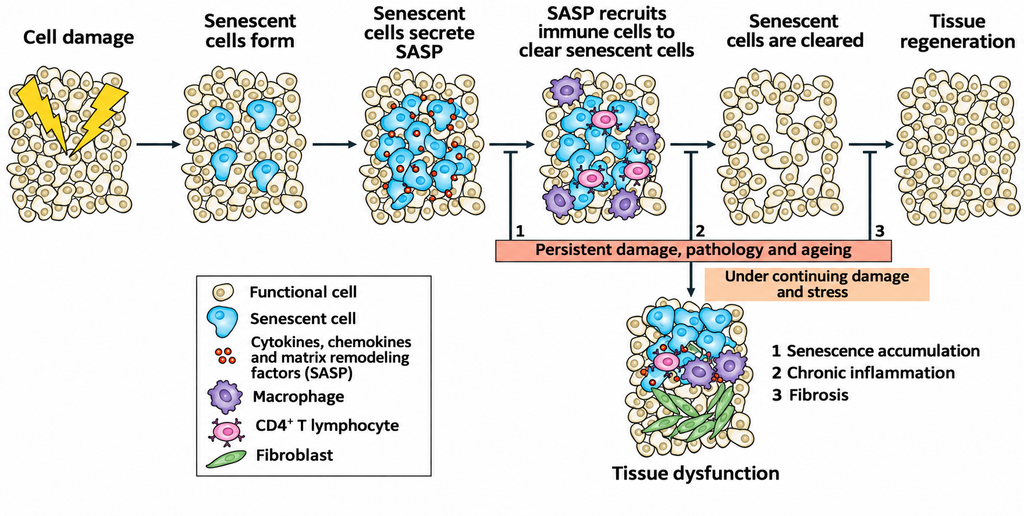
Muñoz-Espín and Serrano, 2014.
Subsequent research led to a more complete understanding of cellular senescence. The senescence programme is a beneficial mechanism for removing unsuitable cells, with important roles in repair and preventing cancer-cell formation. However, the senescent cells produced by that programme can lead to different outcomes depending on the condition of the body.
In a relatively young organism, an immune system strong enough to clear senescent cells promptly makes the overall effect beneficial. It can support tissue regeneration and wound healing and reduce cancer-cell formation. As the organism ages, however, declining immune function or continuing injury may prevent timely clearance. The balance between production and removal is disrupted, and senescent cells begin to accumulate.
These accumulated cells can contribute to fibrosis and impair the normal function of tissues and organs. They can also continue secreting SASP factors that damage surrounding cells, generate further senescent cells and favour cancer-cell formation and growth. Numerous studies have linked their accumulation not only to organ ageing and functional decline, but also to the continued acceleration of those processes. Conditions discussed in this research include atherosclerosis, type 2 diabetes, Alzheimer’s disease, cataracts, osteoporosis and chronic obstructive pulmonary disease. In animal experiments, artificially introducing senescent cells has also been found to accelerate ageing.
Early research into senolytic drugs
Put simply, the senescence programme needs to exist, but the author argues that the senescent cells it produces should be cleared as quickly as possible because they can impair organ function and secrete inflammatory SASP factors. As these mechanisms became clearer, Mayo Clinic in the United States began researching senescent-cell clearance in 2011.
In 2015, a team led by Dr James Kirkland at Mayo Clinic introduced the concept of senolytic drugs. In a paper published in Aging Cell, they took a combination of two agents that had shown success in cell experiments, dasatinib and the naturally occurring compound quercetin, and tested it in animals for the first time.
In old mice, a single dose of the combination improved cardiac function and carotid vascular reactivity when assessed five days later. In mice whose one leg had been exposed to radiation, a single dose was followed by improved exercise capacity lasting at least seven months. In genetically modified mice with accelerated ageing, Ercc1−/Δ, treatment delayed age-related pathology and symptoms, osteoporosis and the loss of proteoglycans from intervertebral discs.
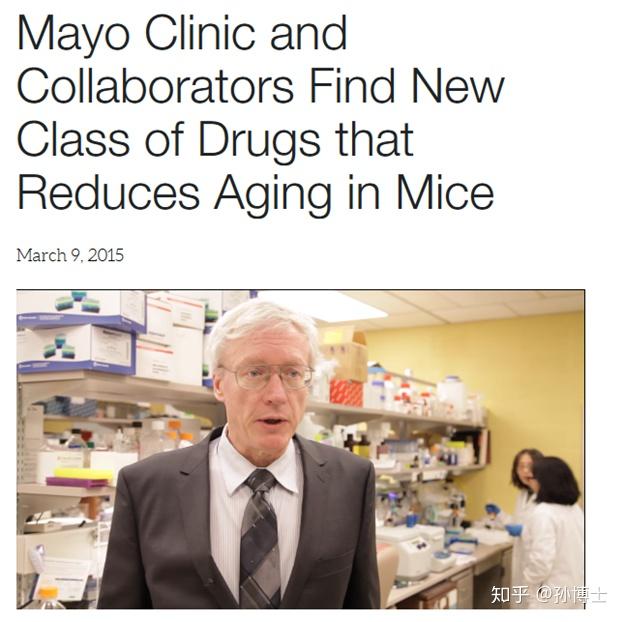
Dr James Kirkland of Mayo Clinic.
The first animal results using dasatinib and quercetin to clear senescent cells were very encouraging. In 2017, CNN also reported on the possibility that senolytic drugs might extend lifespan and slow ageing.

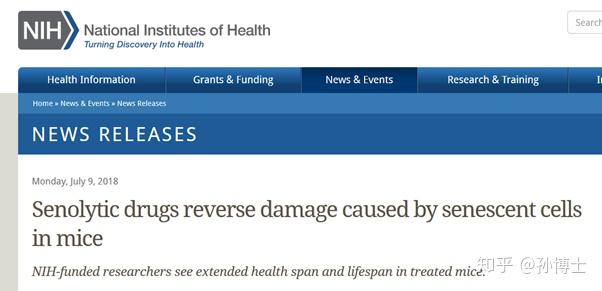
In 2018, Dr Kirkland’s team conducted further animal experiments on senolytic drugs, ageing and lifespan. They found that transplanting even a small number of senescent cells into young mice could substantially harm their health and cause lasting functional impairment. The dasatinib-plus-quercetin combination, or D+Q, could reverse this damage and improve physical function in naturally aged mice. The original article describes a 36% increase in survival and a reduction of mortality risk to 65% of the comparison level.
The article attributes the following interpretation to Richard J. Hodes of the US National Institutes of Health: the age-related accumulation of zombie cells in mice is one of the underlying causes of ageing, and timely clearance may delay age-related health problems, helping organisms remain healthier and live longer.
Early human studies reported in 2019
In January 2019, Dr Kirkland’s team published its first small human trial of senolytic drugs in EBioMedicine, a journal in The Lancet group. Fourteen patients with idiopathic pulmonary fibrosis, discussed in the original article in relation to senescent cells, received D+Q. The researchers reported improvements in physical performance as treatment progressed. The author describes this as almost miraculous for patients with pulmonary fibrosis, a condition regarded as incurable. Following their safety assessment, the team proposed larger trials.
At the Joint Event on World Congress on Tissue Engineering, Stem Cells and Regenerative Medicine and International Conference on Cell and Gene Therapy, held in London in March 2019, Dr Tkemaladze, described in the original article as a scientist from the United States, reported results from a second human study of D+Q for senescent-cell clearance. Because of concerns about possible adverse effects of dasatinib on ovarian follicular cells, the researchers recruited 64 men. The article reports that physical endurance improved markedly after five days of D+Q.
In September 2019, Dr Kirkland’s team published another report. They recruited nine overweight patients with diabetic kidney disease, including two women, with an average age of 68. After three days of D+Q, markers of senescent cells in their bodies and circulating SASP factors were significantly reduced within 11 days. The author presents this as direct evidence available at the time that senolytic drugs could reduce senescent cells in humans.
Natural compounds under investigation
In light of the reported benefits of senescent-cell clearance in animals and humans, more research has explored naturally occurring compounds with senolytic potential. Alongside quercetin, fisetin and piperlongumine were among the natural substances identified in recent years as having senolytic activity. At the time of the original article, evidence specifically concerning senescent-cell clearance by these two compounds remained at the cell and animal stages, and relevant human data were still awaited. A number of synthetic senolytic drugs were also entering clinical studies, although their arrival on the market still appeared distant.
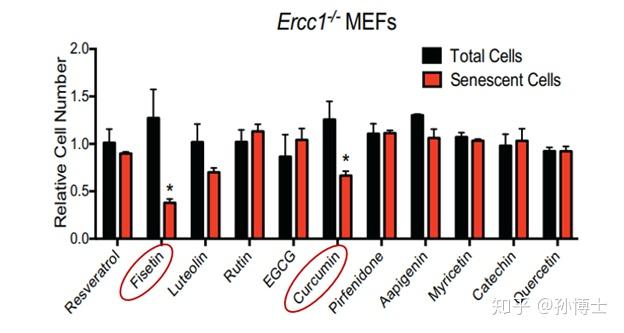
Yousefzadeh et al., 2018.
Why the author focuses on curcumin
Leaving aside newly identified senolytic compounds, I would like to highlight a familiar substance, curcumin. Several cell studies have reported senolytic effects, and EF24, a new molecule derived from curcumin’s structure, was being developed as a senolytic agent.
I single out curcumin because, in my view, it is an unusual multifunctional natural compound that can support the senescence programme, help clear senescent cells and counteract SASP. In other words, the author sees it as covering the full process of addressing senescent-cell damage.
As noted above, an appropriate senescence response can be beneficial. Curcumin may help this mechanism convert unsuitable cells into senescent cells, thereby reducing the possibility of cancer-cell formation. This is also one of the proposed explanations for turmeric’s anticancer activity. For cells that are already senescent, the author describes curcumin as helping to eliminate them, with activity approaching that of fisetin. Curcumin may also counteract and suppress inflammatory SASP factors. These are the three main principles of senotherapy discussed here.
Another reason for mentioning curcumin is the substantial body of human clinical research available at the time. The author considers findings relating to inflammation, healthspan, cancer, insulin sensitivity and metabolism to be consistent with the theory of senescent-cell clearance, and therefore regards curcumin’s safety and effects as better supported than those of the newer candidates fisetin and piperlongumine.
Curcumin is also described as an AMPK activator. A substance that could address so many proposed aspects of ageing is, in the author’s view, unusual. Its major drawback is poor bioavailability, and many clinical trials have used very high doses. The author argues that a specially formulated curcumin preparation would be needed for effective personal use, and proposes discussing this in a future article.
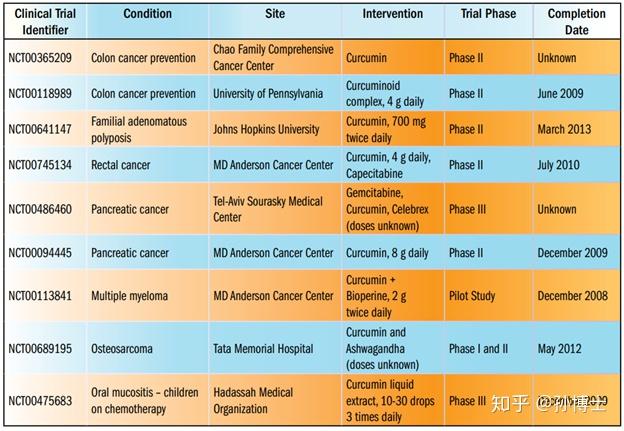
Clinical studies of curcumin in cancer research summarised in a 2009 review. Trial information and dates are historical.
The author’s conclusion
In summary, the author regards senotherapy as an anti-ageing approach with a relatively clear theoretical basis, substantial supporting evidence and promising feasibility at the time of writing. The human studies discussed are interpreted as suggesting reduced inflammation and improved physical stamina and endurance.
Setting aside fisetin and piperlongumine, for which human senescent-cell-clearance data were not yet available in this account, the author considers dasatinib plus quercetin to be a comparatively well-studied and credible senolytic combination, citing three human studies. Because dasatinib is a prescription medicine and may adversely affect ovarian follicular cells, the author does not recommend taking it.
Among natural compounds, curcumin is the author’s personal preference because of its proposed effects across senescence-related processes, the available human clinical literature and its activity as an AMPK activator. For people seeking a non-synthetic-drug approach to senescent-cell clearance, the original article suggests quercetin plus curcumin, with fisetin and piperlongumine as optional additions. This is the author’s original 2020 opinion.
References
- Ovadya Y, Krizhanovsky V. Senescent cells: SASPected drivers of age-related pathologies. Biogerontology. 2014. DOI: 10.1007/s10522-014-9529-9.
- To Stay Young, Kill Zombie Cells. Scientific American.
- Childs BG, Gluscevic M, Baker DJ, Laberge RM, Marquess D, Dananberg J, van Deursen JM. Senescent cells: an emerging target for diseases of ageing. Nat Rev Drug Discov. 2017;16(10):718–735. DOI: 10.1038/nrd.2017.116. Epub 21 July 2017.
- Zhu Y et al. The Achilles’ heel of senescent cells: from transcriptome to senolytic drugs. Aging Cell. 2015;14(4):644–658. DOI: 10.1111/acel.12344. Epub 22 April 2015.
- Muñoz-Espín D, Serrano M. Cellular senescence: from physiology to pathology. Nat Rev Mol Cell Biol. 2014;15(7):482–496. DOI: 10.1038/nrm3823.
- Xu M et al. Senolytics improve physical function and increase lifespan in old age. Nat Med. 2018;24(8):1246–1256. DOI: 10.1038/s41591-018-0092-9. Epub 9 July 2018.
- Justice JN et al. Senolytics in idiopathic pulmonary fibrosis: Results from a first-in-human, open-label, pilot study. EBioMedicine. 2019;40:554–563. DOI: 10.1016/j.ebiom.2018.12.052. Epub 5 January 2019.
- Hickson LJ et al. Senolytics decrease senescent cells in humans: Preliminary report from a clinical trial of Dasatinib plus Quercetin in individuals with diabetic kidney disease. EBioMedicine. 2019;47:446–456. DOI: 10.1016/j.ebiom.2019.08.069. Epub 18 September 2019.
- Yousefzadeh MJ et al. Fisetin is a senotherapeutic that extends health and lifespan. EBioMedicine. 2018;36:18–28. DOI: 10.1016/j.ebiom.2018.09.015. Epub 29 September 2018.
- Farsad-Naeimi A et al. Effect of fisetin supplementation on inflammatory factors and matrix metalloproteinase enzymes in colorectal cancer patients. Food Funct. 2018;9(4):2025–2031. DOI: 10.1039/c7fo01898c.
- Bielak-Zmijewska A et al. The Role of Curcumin in the Modulation of Ageing. Int J Mol Sci. 2019;20(5):1239. DOI: 10.3390/ijms20051239. Published 12 March 2019.
- Malavolta M et al. Inducers of Senescence, Toxic Compounds, and Senolytics: The Multiple Faces of Nrf2-Activating Phytochemicals in Cancer Adjuvant Therapy. Mediators Inflamm. 2018;2018:4159013. DOI: 10.1155/2018/4159013. Published 12 February 2018.
- Jurenka JS. Anti-inflammatory properties of curcumin, a major constituent of Curcuma longa: a review of preclinical and clinical research. Altern Med Rev. 2009;14(2):141–153.
- Mosieniak G et al. Curcumin induces permanent growth arrest of human colon cancer cells: link between senescence and autophagy. Mech Ageing Dev. 2012;133(6):444–455. DOI: 10.1016/j.mad.2012.05.004. Epub 18 May 2012.
- Cherif H et al. Curcumin and o-Vanillin Exhibit Evidence of Senolytic Activity in Human IVD Cells In Vitro. J Clin Med. 2019;8(4):433. DOI: 10.3390/jcm8040433. Published 29 March 2019.