
Cellular reprogramming in humans is moving into early clinical testing. On 8 October 2026, Life Biosciences announced initial observations from its ER-100 study in people with open-angle glaucoma.
For readers following longevity research, the news raises a useful question: what would count as evidence that an intervention changes ageing? Understanding the answer starts with separating three ideas often grouped together: cellular reprogramming, NAD+ metabolism and biological-age biomarkers.
What Did the ER-100 Announcement Report?
According to the company’s interim announcement:
- Three participants with open-angle glaucoma received the first dose level.
- No serious adverse events or dose-limiting toxicities were reported through Day 56.
- Two participants showed preliminary improvement signals in visual-field testing.
- The independent Data Safety Monitoring Board recommended proceeding to a higher dose level.
These are sponsor-reported observations from an ongoing, open-label Phase 1 study focused on safety and tolerability. They do not establish treatment effectiveness or whole-body age reversal. A decision to increase the dose allows further investigation; it is not confirmation of benefit.
What Is Cellular Reprogramming?
Cellular reprogramming involves changing the activity of genes that help determine how a cell functions. Partial reprogramming aims to alter aspects of a cell’s state while preserving its specialised identity.
This differs from fully reprogramming a mature cell into a pluripotent stem cell. For a specialised tissue, retaining the cell’s existing role matters. Researchers must determine whether useful changes can be achieved without unwanted changes in identity or function.
ER-100 is being developed using controlled expression of three transcription factors: OCT4, SOX2 and KLF4, collectively called OSK. Life Biosciences describes its approach as an attempt to restore function in retinal ganglion cells, the nerve cells that connect the eye to the brain. See the company’s clinical programme announcement.
Why Are Researchers Studying the Eye?
Earlier work provides part of the scientific background. A 2020 study published in Nature investigated OSK expression in mouse retinal ganglion cells. Researchers reported changes in DNA methylation and gene-expression patterns, nerve regeneration after injury, and improved visual function in studied mouse models.
Those findings helped motivate further research. However, an animal result cannot establish the outcome of a human intervention. Moving into clinical testing means that the proposed approach must now be evaluated in people, with different safety requirements and clinically meaningful outcomes.
Can Cellular Reprogramming Reverse Ageing?
The question needs a precise definition. A change in a cell’s molecular profile, an improvement in one organ’s function and an increase in human lifespan are different outcomes.
To assess a proposed rejuvenation therapy, useful questions include:
- Does it improve a meaningful measure of function?
- Does the improvement last?
- Can the result be reproduced in more participants?
- Does a controlled comparison support a treatment effect?
- What risks appear during longer follow-up?
Researchers also need to understand how effects vary by tissue and how reprogramming can be controlled. A 2024 scientific review of reprogramming-induced rejuvenation discusses these challenges. It explains why encouraging molecular changes must be assessed alongside function and safety.
Cellular Reprogramming vs NAD+ Metabolism
NAD+ is a coenzyme involved in normal cellular metabolism. The body uses vitamin B3 compounds, including nicotinic acid and nicotinamide, to make NAD. The US National Institutes of Health niacin fact sheet explains its role in energy-transfer reactions and other cellular processes.
Research on NAD+ metabolism asks questions about nutrient availability, biochemical pathways and cellular function. Cellular reprogramming asks whether changing gene-expression programmes can alter a cell’s state.
The two topics can appear in the same ageing discussion, but they are not interchangeable. A result from an experimental reprogramming therapy cannot be used as evidence that an oral NAD+ precursor supplement produces the same effect.
For background on precursor compounds, read our comparison of niacin, NMN and NR.
What Do Biological-Age Biomarkers Measure?
Chronological age measures elapsed time. Biological-age biomarkers attempt to describe aspects of biological condition using measurable features.
For example, epigenetic clocks use patterns of DNA methylation to estimate age. Steve Horvath’s 2013 research developed a DNA methylation age estimator across multiple human tissues and cell types.
A biomarker is a measurement tool. A lower estimated age after an intervention does not, by itself, demonstrate better vision, improved daily function or a longer life. The interpretation depends on the test, the tissue sampled and evidence linking the measurement to meaningful outcomes.
Frequently Asked Questions
What does OSK stand for?
OSK refers to OCT4, SOX2 and KLF4, three transcription factors studied in cellular reprogramming.
Did the ER-100 announcement prove that human ageing was reversed?
No. The announcement concerns early observations in a small eye-disease study, not proof of general age reversal.
Is an epigenetic clock the same as a treatment?
No. An epigenetic clock estimates age from molecular measurements. A treatment is an intervention whose effects and risks must be tested.
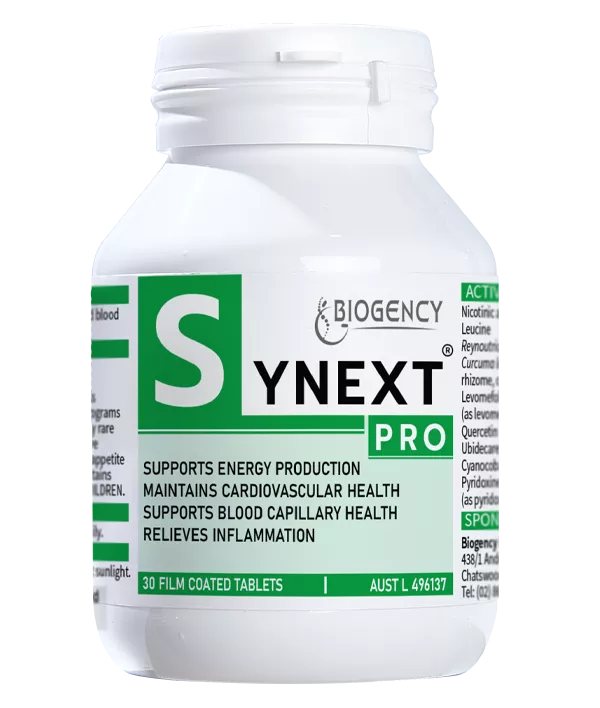
Does this research show that Synext works like ER-100?
No. The ER-100 study does not test Synext. Its observations cannot be attributed to Biogency supplements.
How to Follow Longevity Research Without Overreading the Headlines
Start with the original source. Check whether the evidence comes from cells, animals or people. Then examine the study design, the outcomes measured and the length of follow-up.
Most importantly, ask whether the headline describes what was actually measured. Molecular changes, functional improvements and lifespan outcomes each require their own evidence.
Explore more explanations of cellular biology and nutrition in the Biogency Blog.
Research update prepared on 9 October 2026. This article explains published research and company announcements. It does not provide individual treatment advice.